OK, slightly off topic. But, Arturo O'Farrill is one of my favorite band leaders. His music is great and full of meaning. Please watch this video.
23 June 2009


14 June 2009
Review: The Yiddish Part

The Yiddish Part
Anakronic Electro Orkestra
I have been following Anakronic Electro Orkestra for about a year now, and have been anticipating the release of their first album, The Yiddish Part. Based in Toulouse, France, this quartet of Klezmer musicians has found a way to bring Klezmer music into the world of electro beats and samples. I have been impressed with many of the Klezmer bands in Europe today, and I think that AEO is among the best out there today. The arrangements are all by the band’s leader, Mikael Charry, who put together this jigsaw puzzle of sounds and created some great music.
The Yiddish Part is a short album, containing only five tracks, but it is clear that they have focused a lot of energy on this project and I hope that there will be more tracks ready for release soon.
Zibn opens the album with a high-energy rhythmic melody by the Clarinet, accompanied by driving percussion, Accordion, and cool electronic sounds. After a Drum break, it switches to more of a reggae beat with the Keyboard taking over the melody.
Terk In America is full of percussion and electronics, backing up the familiar melody in the Clarinet. I have to give AEO kudos for this arrangement. I like the very traditional Klezmer Clarinet sound mixed with the fast-paced electronics, steady drums, and smooth Accordion pads. I have not heard the song done this way before, and I’m sure they will be recognized for it.
Why Is It Funny? Is my favorite track on the album. I think it showcases the essence of what AEO is all about. The Clarinet melody is traditional Klezmer, but the electronic sounds are innovative, and the drums are more of a hard-hitting rock style. A horn section of Trumpet, Trombone, and Sax make a guest appearance as well. I must point out the Accordion work here, also of a traditional nature, is prominently featured along with the Clarinet. I keep coming back to this song and am excited when it pops up on my playlist.
Speak With Ghosts mixes sampled vocals with the music. It moves to a short interlude with the Clarinet in the low register, then suddenly changes to a fast tempo with the Clarinet taking off with the Accordion over the pulsing electronics and Percussion. There is a cool Clarinet/Accordion vibe here that blends well with the rest of the band’s sounds.
Free Klarinet Screamin’ In My Head is AEO’s take on a Doina. This is a Clarinet feature that makes liberal use of sampling and overdubs to make the instrument sound like one of the electronic machine sounds. It’s definitely not a tune that you can sing along with, but it shows what the band can do when they twist the music around in a way that pushes the envelope just a bit as they blur the line between acoustic and electronic. The Clarinet is no longer just an instrument, but a new bank of sound samples that the band has to work with. It took a while for me to catch on to this, but now I get it.
The audio quality is quite good. The electronic machines are not overpowering, and the Drums on Zibn are clean, with good detail on the Cymbals. The Clarinet and Accordion blend well together. The album sounded full and lively on my home theater system and on my car system, but lost some of the punch on my laptop computer’s speakers. Kudos to engineers Manu Cabrol, Ludovic T. Kierasinski, Lionel Nicod, and Benjamin Joubert.
The CD package I received was a sleeve with the wonderful artwork and logo on the front and the track list/credits on the back.
Anakronic Electro Orkestra are well on their way to earning wider recognition for their unique style and recognizable sound. They’ve made a great start and I wish them much success. Give their music a listen and see for yourself.
Keith Wolzinger
Klezmer Podcast
The Yiddish Part
Anakronic Electro Orkestra
JuMu
2008
Band Members:
Mikael Charry / Machines
Ludovic T. Kierasinski / Basse
Corinne Dubarry / Accordeon
Pierre Bertaud du Chazaud / Clarinette
Track List:
1. Zibn 4:02
2. Terk In America 3:57
3. Why Is It Funny? 4:05
4. Speak With Ghosts 4:37
5. Free Klarinet Screamin' My Head 2:36
Links:
Anakronic Electro Orkestra
MySpace
JuMu
Amazon
28 May 2009
New Event- Berkeley, CA June 4, 2009
Thursday, June 4
Ashkenaz, 1317 San Pablo, Berkeley CA
Klezmer Céilidh
THE MAD MAGGIES and GO VAN GOGH
Doors at 8:00 p.m.; Show at 8:30 p.m.
$7
A Céilidh (pronounced kay-lee) is a traditional Gaelic dance party, from the days before discos and nightclubs. But the 2 bands tonight are anything BUT traditional, merging Klezmer, Ska, Celtic music and much more into their own unique, high-energy styles.
The Mad Maggies are some crazy musicians from the San Francisco Bay Area who play world-inspired, roots-driven rowdy folk fusion. Tonight’s show follows up on the recent release of their 3rd CD, “Skull and Magpies.” The Mad Maggies are Maggie Martin on vocals and accordion, clarinetist and whistle blower Rhian Robinson, tuba player Johnny Blood, alto saxophonist Adrian Gormley, trombonist Lawrence Jarach, J.X. Lovejones on tenor sax and clarinet, drummer Billy Dee Boom, bassist Lewis Wallace, and guitarist Gary Wium.
www.themadmaggies.com
Bay Area klezmer band Go Van Gogh also doesn’t fit the usual categories. As the members explain, they’re “not your bubbe and zadie’s klezmer band. Call it country music, but we’re not sure what country. Music for a Middle Eastern Western, Balkan surf ska, with a Western Swing Ethiopian twist. Whatever you call it, we play it, and you can dance to it.”
The band’s roots trace back 15 years to a duo formed by Connie and Jesse Walkershaw for their original songs, with various band accompaniments. Eventually the lineup became Go Van Gogh, currently with Connie Walkershaw on soprano and alto saxophone, Michelle Walther on violin, Brad Bechtel on lap steel, Alex Roitman on accordion, Sam Tsitrin on guitar, Jesse Walkershaw on bass, and Kelvin Burton on drums. In concert Go Van Gogh’s repertoire includes original tunes, a century-old klezmer song written by a great-grandfather, and klezmer standards including “The Odessa Bulgar,” “Fun Der Khupe,” and “Be Happy Jews.”
www.govangogh.net
18 May 2009
Review: Song Of Songs
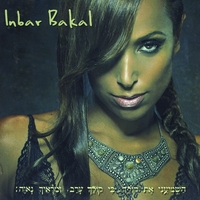
Song Of Songs
Inbar Bakal
Inbar Bakal has made a great first impression with the release of her debut album Song Of Songs (Shir Ha Shirim). Though not yet a household name, the Israeli-American singer brings a welcome freshness to the World Music scene. She has a smooth vocal quality that is ethereal and immediately recognizable. The source material for the album comes from ancient Hebrew biblical texts, yet Bakal reaches back through her Yemenite/Iraqi roots to create a fusion of Middle Eastern textures and American contemporary Electronica. The result is a remarkable listening experience that allows for a deep connection to the music.
This rich musical soundscape results from the collaboration between Bakal and visionary Producer/Arranger Carmen Rizzo, who masterfully combines the Middle Eastern instruments Tabla, Oud, Bouzouki, and Saz with Keyboard, Synth, and Percussion elements. The music is consistent throughout the album, giving the feeling that these songs really are a collection and belong together.
The songs do vary in rhythmic texture. Hallelujah is an expressive piece in 12/8 time, while my favorite track, The Bride, seems to be in ¾ time but with a 10-bar phrase. To me this is the most Middle Eastern sounding piece on the album.
The songs are mostly in Hebrew, with The Bride sung in Yemenite and English. The vocals are set back a bit in the mix and blend well with the other instruments, never overpowering. There are occasional moments of extra processing such as delay effects on Hallelujah and long tail reverb on Meditation. These are effective, though, and add to the emotional impact of these songs.
I must mention the outstanding musicianship of the players on this album. Dimitry Machlis is amazing on Oud, Bouzouki, and Saz. His musical contributions help to set the tone for the album. He lays down some very nice accompaniments and fills, perfectly complementing the vocals. He gets plenty of space to solo as well, and I enjoy every one of those moments. Satnam Singh Ramgotra is a masterful Tabla artist, adding to the Eastern feel and texture of the album.
The audio quality is excellent. I like the way it is mixed in a contemporary World Pop style, making it easy on the ears and appealing to a wide audience. Kudos to producer Carmen Rizzo. I could not find engineering/mastering credits, but kudos to these artists also.
The promo CD I received is a simple package consisting of a sleeve with song titles, credits, and photos. No insert or liner notes, but you can check Bakal’s website for more details.
The album is short, containing six songs, but they are all high quality songs. Bakal did not feel a need to include more songs just to make a full album. I like this approach because it shows that Bakal is more interested in the quality of her music than the quantity. And with the resulting lower purchase price, there is certainly no barrier to obtaining the album either on CD or via download.
I am very impressed with Song Of Songs. Bakal and Rizzo have done a remarkable job of bringing this music to a Western audience. This is an adventure in listening, and as I allowed myself to be transported to another time and place, I am mindful of the beauty of the music and the emotional depth of the underlying context. I don’t know what turn Bakal’s music will take next, but rest assured, it will be something you won’t want to miss.
Keith Wolzinger
Klezmer Podcast
You can hear my interview with Inbar Bakal on Klezmer Podcast 48.
Song Of Songs
Inbar Bakal
2009
Electrofone Records
Band Members:
Inbar Bakal- Vocals
Jaime Muhoberac- Keyboards
Santam Singh Ramgotra- Tablas
Dimitry Machlis- Oud, Bouzouki, Saz
Carmen Rizzo- Programming, Drum, Keyboards
Track List:
1 The Battle of Jerusalem
2 Song of Ascendance
3 The Bride
4 Song of Songs
5 Hallelujah
6 Meditation
Links:
Inbar Bakal
MySpace
CD Baby
29 April 2009
Review: Klezmer Killed The Radio Star

Review: Klezmer Killed The Radio Star
Mames Babegenush
I’ve been following Mames Babegenush for the last couple of years and have been looking forward to the release of their debut album, Klezmer Killed The Radio Star. The wait is over, and I can tell you that this is an album that is destined to make its mark on the Klezmer landscape. The Denmark-based sextet has a sound that combines the best parts of old and new Klezmer to create a sound all their own. Imagine traditional European Klezmer, filtered through mid-20th century American Klezmer styles of New York, Philadelphia, and Chicago, then updated with a modern European twist. They have a big sound, led by a horn section comprised of Clarinet, Trumpet, and Sax. The result is a very entertaining Klezmer sub-genre that is my personal favorite. The talent here runs deep, from soul-searching Doina to the wild madness of the Sirba and Bulgar. They have a knack for playing in both a straight traditional style and then switching to a more rock-influenced style. Both work very well and show a respect for the music’s roots as well as pushing the envelope just a little.
I’m not going to try to pick a favorite song, because they are all great songs and medleys. Many are longtime favorites that I have played myself, and some are new to me. The arrangements are very good and give each soloist plenty of space.
The opening track, Noch Der Havdole, starts with a quiet Accordion intro, then adds Drums in a very traditional Klezmer style. The Horns and Bass join and start to build up the song and pick up the tempo to the end. I really liked the Sax counter melody, a nod to the New York style that I like so much. Nice use of the Wood Block, too.
Tepliker Sher starts with heavy Bass and Rock Drums, then the Accordion joins before the Horns come in with the melody. This is probably the fastest I have heard this song performed, building up a good head of steam right to the end.
Bessarabian Hora/Sirba is a nice change of pace, a slow ¾ Hora to start. I know this one as Romanian Hora and I like this arrangement for the nice background accompaniment with the Trumpet, Sax, and Clarinet taking solo turns. The Sirba picks up the tempo into a nice two-beat tune with Clarinet, Sax, and Muted Trumpet. The tune changes again into a Bulgar and picks up the tempo some more. A clever false ending brings on yet another tune, keeping the energy going right to the end.
Clarinetist Emil Goldschmidt takes on the Doina with a soulful and traditional sound that evokes the style of Brandwein and Tarras. Trumpeter Bo Rande takes over to start In A Rumeynisher Shenk, still in a slow tempo. He gets a sweet, smooth sound from the horn that I like very much. Clarinet and Sax take turns as well, adding their special touches. I like the background parts played by each horn behind each soloist. That makes for a great sounding band. The tempo picks up, switching between a two-beat and Bulgar rhythm. Drummer Christian Horsted does a great job here as well.
Fun Tashlikh is a popular song from the repertoire, and it has been recorded many times in recent years, but Mames Babegenush opens it up a bit more with a strong Bulgar tempo and giving the Horns and Accordion some room to explore the fun world that this song is capable of creating. I like this particular arrangement very much.
Kojak is another great tune, showing how well the band blends all the instruments into a great arrangement. The Drums and Bass really drive the band here, changing the pace a bit with a steady Balkan rhythm. There is an open section for an extended solo from Rande on Trumpet.
Galatas is a Bulgar feature for Clarinetist Goldschmidt and Trumpeter Rande. Heavy driving Bass and Drums make this a fun song to listen to. This is a traditional tune, but they take it to a completely new level.
Opshpiel far di Makhetonim starts with slow Drums, then the Clarinet enters with the solo melody. Goldschmidt is in top form here, delivering a soulful and gritty sound that shows his considerable talent. Sax takes over the melody with Trumpet accompaniment. Then a fast Bulgar starts with a song I know as Bukovina Chusid’l. This is another favorite of mine, and again I like the Bass and Drums here a lot.
Zol Zay Gelebt/Bulgar ala Naftule starts with a fast Freylekhs in a Chicago style. There is room for an open Clarinet solo before moving on to the next tune that I know as Purim Nigun. It is a good, fast Bulgar with a nice arrangement.
Fufzehn Yahr von der Heim Awek starts with a lovely Trumpet Doina which leads into the main theme. This is a beautiful song that shows the depth and sensitivity of the band. Lukas Rande shows some nice Sax work as well, before Goldschmidt takes over on Clarinet. The horn accompaniments are very nice here. The song changes character to a Terkish style, then changes to a Russian March to end the piece. The contrasting styles make this one another favorite track.
Nigun is an unaccompanied Accordion solo from Nicolai Kornerup and it adds a nice touch to the album. Many times the Accordion does not get a moment to shine, but this gentle tune is a nice way to show us the softer side of the instrument and also eases us back to our own world as we say goodbye to Mames Babegenush.
The audio quality is excellent, with an extended low end that gives punch to the Bass and snap to the Kick Drum. The Drums and Cymbals are some of the best I’ve heard. The Accordion is blended nicely, and the Horns sound very clear. I did notice some room ambience on the Clarinet and Sax during the solo moments, but it doesn’t detract from the performance in any way. The mix sounded wonderful on my home theater and only lost a bit on the bottom end when listening on earbuds.
I had a pre-release copy of the album, so I did not have the full CD package. I did see the album artwork, though, and there appear to be album credits along with band photos and some pretty outrageous graphics. I’ll update this after I receive a production copy.
Mames Babgenush have hit upon a winning combination of artistry and originality while simultaneously being faithful to the tradition and pushing the genre forward. Klezmer may have killed the radio star, but Mames Babegenush has brought us a breath of fresh air. Well done, guys.
Keith Wolzinger
Klezmer Podcast
Klezmer Killed The Radio Star
Mames Babegenush
2009
Band Members:
Emil Goldschmidt > Clarinet
Bo Rande > Trumpet
Lukas Rande > Saxophone
Nicolai Kornerup > Accordeon
Andreas Møllerhøj > Bass
Christian Hørsted > Drums
Track List:
1 Noch der Havdoleh
2 Teplikher Sher
3 Bessarabian Hora
4 Sirbas
5 Doina
6 In a Rumeynisher Shenk
7 Fun Tashlikh
8 Kojak
9 Galatas
10 Opshpiel for di Makhetonim
11 Zol Zayn Gelebt
12 Bulgar ala Naftule
13 Fufzehn Yahr fon der Heim awek
14 Nigun
Links:
Mames Babegenush MySpace
24 April 2009
Klezmer Podcast 51- Watcha Clan

I posted Klezmer Podcast 51, featuring an interview with Watcha Clan from Marseilles, France. You can listen from iTunes and:
Klezmer Podcast
Blubrry
21 April 2009
Watcha Clan New CD
I just received this CD announcement from Watcha Clan. Look for a review and podcast interview soon!

WATCHA CLAN presents :
"DIASPORA REMIXED"
Nu album coming out the 3rd of april
released by Piranha (Berlin)
available on LP and Download
Diaspora Remixed is a community global beat project featuring
electro-world DJs met on the tour trail around Europe. Transglobal
Underground, Shazalakazoo, EarthRise SoundSystem, Dunkelbunt, Dj Click,
Gaetano Fabri, BalkanXpress, Undergang, Spark, Mars Exist, Barrio
Populaire and Stratman put their personal spin on W-Clan's Diaspora
Hi-Fi, a 2008 World Music Charts Europe top album.
TRACKLIST:
1.Lei Lei Ha (TransGlobal Underground remix)
2.Balkan Qoulou (Shazalakazoo remix)
3.Balkan Qoulou (Dunkelbunt remix feat Cloud Tissa & MC Killo Killo)
4.Tchiribim (Balkan Xpress remix)
5.Goumari (EarthRise SoundSystem remix)
6.Goumari (Shazalakazoo remix)
7.Diaspora Dub (Undergang remix)
8.Limu (Mars Exist remix)
9.Goumari (Dj Click remix)
10.Eli (Gaetano Fabri remix)
11.Eli (Barrio Populaire remix feat Fil-a-fil)
12.Goumari (Spark remix)
13.Les courbes de ton corps (Stratman remix)
available on:
itunes, CD1D, Piranha, emusic, juno, dj download...
Distribution France by Discograph / Germany by Indigo
Digital distribution by Zebralution
We would like to thank all friends, partners and promoters who help us to diffuse the Diaspora Sound...
Peace, Salam, shalom...
Cheers from Marseille.
More infos on:
http://www.myspace.com/watchaclan
http://www.watchaclan.com
Subscribe to:
Posts (Atom)