Facebook Like

Showing posts with label spanish. Show all posts

28 January 2023

David Broza- La Mujer Que Yo Quiero

 DAVID BROZA

LA MUJER QUE YO QUIERO

Album Release: January 27, 2023


For immediate release: December 20, 2022

David Broza will release an all new album, LA MUJER QUE YO QUIERO on January 27, 2023  


LA MUJER QUE YO QUIERO is the Spanish version of David Broza’s epic album HA’ISHA SHE’ITI, released 40 years ago, and the best-selling album in the history of Israel’s record industry. The original album was an homage to Spanish popular music in the late 70’S and early 80’s.  The new album, LA MUJER QUE YO QUIERO, brings the music back to its roots, with the songs performed in Spanish as they were originally written.


40 years ago, the songs of HA’ISHA SHE’ITI were meticulously translated into Hebrew by the great Israeli poet Jonathan Geffen, with a fluency that made them seem like they were originally written in Hebrew – so much so that few people remember the songs originated in Spain. During the past few years, David Broza played the songs, mixing the Spanish with the Hebrew lyrics, while performing them live. This awakened Broza to the idea of recording a 40th anniversary version of the album, all in Spanish.


In October 2022, Broza traveled to Madrid, Spain, and cut the album in one take, over one day. The preparation took over a month – rehearsing long hours and establishing his voice in the Spanish language. Altogether, nine songs made up the entire album. Only one song from HA’ISHA SHE’ITI, “Rumba”, written by Broza with Geffen, was originally sung in Hebrew. “Rumba” was replaced in LA MUJER QUE YO QUIERO by “La Más Bella Niña,” another translated song which was not part of HA’ISHA SHE’ITI. The track is a poem from 16th-century Spain by Luis de Góngoras, with musician Paco Ibañez’s melody. “La Más Bella Niña” was the first song Jonathan Geffen translated into Hebrew and the song which started this project over 40 years ago.  


The idea for LA MUJER QUE YO QUIERO was to make raw versions of the songs – only vocal and guitar. The metamorphosis was intense. During the recording, Broza sang a straight set over eight hours, barely stopping for a coffee. “Only after the session was over did I realize that I had immersed myself into the songs with my whole body and soul. It was so intense, it took me several days to unwind,” says Broza.  The result is a stark and pure performance, live to tape, of the songs from HA’ISHA SHE’ITI, now sung in Spanish and called LA MUJER QUE YO QUIERO.


About David Broza: 

David Broza is an internationally renowned Israeli singer-songwriter, recognized for his dynamic guitar performances and humanitarian efforts. His signature sound brings together songs in Hebrew, Spanish and English, with the influence of Spanish flamenco, American folk, rock and roll, and poetry. Social justice and peace advocacy are embedded in Broza’s work, as his 1977 hit song “Yihye Tov” remains an Israeli peace anthem. He has over 40 albums released, many of which are multi-platinum. Broza’s travels have contributed to his international sound and commitment to human connection, story-telling, and equality.  Broza’s charismatic, vibrant, and passionate energy is far-reaching and carries global impact. He is an extraordinary entertainer, and an industry innovator.


Listen to LA MUJER QUE YO QUIERO here.


www.davidbroza.net 


Media contact: 

Mark Gorney   Worldisc Global Promotion   +1 510.665.4211   worldisc@gmail.com 


31 October 2017

November 15th, Butterfly Buzz will proudly present Israeli singer Yasmin Levy At Ace Hotel DTLA


Events


Yasmin Levy - Los Angeles with Special Guests

11/15/2017
The Theatre at Ace Hotel
Butterfly Buzz is proud to present Yasmin Levy’s Los Angeles premiere collaboration performance alongside special Iranian guest artists Faramraz Aslani, Shahrokh Moshkin Ghalam & Hamed Nikpay!
Tickets Available Online ONLY bflybuzz.com/YasminLevy
Limited Preferred Seating Available
Contact: 888-779-8489
A unique and historic concert of an exceptional Israeli singer joined by these prominent performers, amplifying the message of unity through art. The concert will be hosted at the historic The Theater at Ace Hotel; a delicately restored 1920’s movie palace originated by Mary Pickford and Charlie Chapman.
Yasmin Levy sings in Ladino, an ancient form of the Spanish language that was kept alive by the Sephardic Jews. With a deep, spiritual, and moving style, Yasmin Levy is a leading voice in Ladino song and culture. In addition to being a leading voice in Ladino song and culture, she is a contemporary singer/songwriter, performing in modern Spanish, as well as bringing the flavors of Flamenco, Turkish and Persian music all together into a style of her own.
Yasmin Levy made it her cause to recast and transmit the disappearing musical legacy of Ladino, the Judeo-Spanish language of the Sephardic Jewish communities that were driven from Spain in the late 15th century. Amongst Sephardic Jewish communities across North Africa, Turkey, the Balkans and the Middle East, Ladino survived as a language until almost vanishing in the 20th Century. Yasmin Levy’s father, Yitzhak Levy, was the head of the Ladino department at Israel’s National Radio, but Yitzhak died when she was only a baby. Before his passing, he had taught her mother the songs, and in turn she taught her daughter.

26 February 2015

Klezmer Podcast 121- Simja Dujov

Klezmer/Jewish music from Argentina


Klezmer Podcast 121- Simja Dujov. Another episode from the 2014 Ashkenaz Festival, my guest is Simja Dujov of Argentina. There is a diverse Jewish music scene there, and Dujov pushes the limits with his DJ mix of Klezmer, Gypsy, Cumbia, and Surf music. He puts on a high energy multimedia show that keeps the audience on their feet. We hear the track Shalom from his album Santificaras La Fiesta.


03 May 2014

Klezmer Podcast 113- Sarah Aroeste


Klezmer Podcast 113- Sarah Aroeste. This episode features an interview with Sarah Aroeste, a Ladino singer specializing in music from the Sephardic tradition of Greece. We hear the track Gracia, from her album of the same name.
Run time: 22:19.

22 February 2014

Klezmer Podcast 111- Tiembla El Moehl


Klezmer Podcast 111- Tiembla El Moehl. This episode features an interview with the bandTiembla El Moehl, from Buenos Aires, Argentina. They play a lively, upbeat style of Jewish/Klezmer, and keep very busy with Jewish events around the area, plus touring around South America. We hear their track Shuster.
Run time: 27:43


Listen to the Podcast episode here:


Exclusive live performance of Shuster:

Klezmer Podcast 110- Klezmerson


Klezmer Podcast 110- Klezmerson. On this episode my interview guests are Benjamin Shwartz and Dan Zlotnik of the band Klezmerson, from Mexico City. Klezmerson blends Latin rhythms and Klezmer to create a unique musical style all their own. We hear the track Augmented from the album 7. I caught the band at Skirball Center in Los Angeles on 5 October, 2013.
Run time: 17:40


16 July 2011

Review: Radio Babel


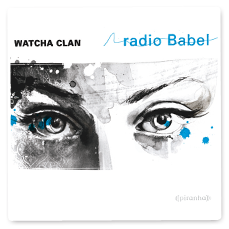
Watcha Clan, the French-Mediterranean group from Marseilles, is at it again with their newest release, Radio Babel. If there is a band who could single-handedly bring about World Peace, this is the one. Unlike the biblical Babel, which caused Man’s separation by creating all the different languages, this album succeeds in bringing many languages and cultures together to celebrate the One-ness of mankind.

The siren of the group, Sista K, sings in multiple languages with ease, and manages to communicate the feeling of each song perfectly. French, English, Arabic, Spanish, Yiddish, and more are handled with finesse.

Suprem Clem is the gifted beat-master who comes up with the most danceable background rhythms that perfectly complement Sista K’s luscious vocals. His balanced use of Electronic beats and Acoustic instruments are the key ingredient in the band’s worldwide success. There is never a moment that goes by without something interesting happening in this music.

The central idea of World Peace is given focus with three tracks on the album. The opener, With or Without The Wall, as well as the longer version, With or Without Extended Mix, rail against the concept of any kind of wall, physical or political. A line spoken on the track conveys the simple idea: “It is time to make peace in every land.” Another spoken voice is more direct: “But the idea that you can actually put the wall and so that there will be no contact and that there will be therefore no violence is just not true. The people who want to do violence will do the violence with or without a wall. With a little more difficulty or less difficulty.” The extended version is more of a dance mix, with more electronic and vocal beats, some great Bass and Guitar riffs, and some cool panning effects. The third track of the group is We Are One, Watcha Clan’s plea for a single global community. As Sista K offers: “Land and Men. Who does the land belong to? Men or God? Nobody owns the land. Land is free. So why wars, why borders?” I applaud Watcha Clan for their noble goal. If World Peace cannot be achieved through political and diplomatic efforts, maybe it could be achieved through the sharing of music, one of the most powerful forms of communication there is.

Hasnaduro is a feature for Nassim, accompanied by Sista K, and has a full complement of North African Arabic rhythms and modality. I love this style. It is full of energy and makes you just want to sing along.

Im Min Alu Intro/Im Min Alu starts with a reed instrument opening, brass choir and Sista K soaring above them all, then switching into a Klezmer-style beat for a moment before going into a Spanish/Ladino vocal with a terrific blend of electronic beats and fills. Suprem Clem uses a wide range of sound effects in his work, and for this song he has chosen a doorbell and creaky door to fill the gaps.

Il Etait Une Fois Dans L’Est starts with a Banjo and whistling before Sista K joins in with a beautiful rendition of the Yiddish standard Shen Vi Di Lavone. Some Klezmer style Violin fills complete the authentic feel, and the switch to a French vocal seems just right. The slower pace gives a short respite from the fast pace of much of the album.

Driving electronics and drums with Electric Guitar keep the pace fast on Fever Is Rising, another plea for peace, and perhaps a musical response to this year’s political upheavals among the Arab nations. With the spoken lines, “It is time to make peace with the planet.” “And the fever is rising.” “Out of sight and out of mind”. “Life or death. But there is hopeful news as well. We have the chance to change the world.” “We are what is wrong.” “Now is the time.” “And the fever is rising” becomes a chant repeated through the song, acknowledging the rising tide of grassroots political change.

Tangos Del Cachito and El Quinto Regimiento give Sista K a chance to sing in Spanish, and the electronic beats will surely keep the dancers on the floor, especially the Flamenco-influenced latter track.

Osfour takes us back to the Arabic world, with the appropriate electronic effects and simpler acoustic Guitar and Bass keeping the song from getting too heavy. La Camel keeps us in the same geographical zone, with Arabic and French bouncing back and forth, and a heavier electronic remix feel keeps things moving. A fun surprise at the end is to switch into an old big band version of Bei Mir Bistu Shen, fading out with an old scratchy record sound layered on top.

Viens Viensopens with and old scratchy record sound then goes into a Piano solo before transitioning to a fast beat and French lyric. Some great Guitar riffs and driving electronics keep this track on the move.

Gypsy Dust takes us far away to the Balkans where these regional Brass Band rhythms are blended with Suprem Clem’s electronic wizardry to create another wonderful Watcha Clan mashup.

Ashanti blends Sista K’s english lyrics with African rhythms, chants, and hand claps and driving electronics to give another dance track that will bring everyone out on the floor.

Radio Babel succeeds on so many levels. Multiple languages, varied ethnic beats, clever use of Electronics, and masterful musicianship combine to drive Watcha Clan to the top among World Music groups. Listen and enjoy. Feel the world beats. Let yourself be taken on the global journey that is Radio Babel.

Band Members:
Matt Labesse (bass)
Nassim Kouti (vocals, guitar)
Sista K (vocals)
Soupa Ju (production & management)
Suprem Clem (sampling, programming, keyboards)

Track List:
1. With Or Without The Wall 2:11
2. We Are One 3:58
3. Hasnaduro 3:47
4. Im Nin'alu Intro 1:47
5. Im Nin'alu 3:21
6. Il Était Une Fois Dans L'est 4:02
7. Fever Is Rising 4:30
8. Tangos Del Cachito 3:27
9. Osfour 3:58
10. La Camel 2:06
11. Viens, Viens 4:27
12. Gypsy Dust 4:24
13. Ashanti 5:10
14. With Or Without The Wall (Extended Mix) 4:49
15. El Quinto Regimiento 4:09
16. Overseas Rêveries (Digital Bonus Track) 5:15

Piranha Musik- Radio Babel
Watcha Clan Website

15 November 2008

Review: DeLeon


Review: DeLeon
DeLeon


DeLeon is the self-titled debut album of the Sephardic Indie-rock band led by Dan Saks. The group’s progressive sound is instantly ingrained on the listener from the first note of the album. The concept of the album is fresh and distinctive, while still managing to retain the essence of the Sephardic experience. By using complex Spanish and middle-Eastern percussion and electronic rhythms along with Ladino, Hebrew, and English lyrics, DeLeon brings the Sephardic culture to the forefront of the urban Jewish music scene. By changing languages within the songs, DeLeon not only appeals to a broader audience, but also adds authenticity and respect for the culture behind the music.

I was immediately drawn to this musical genre so well defined by DeLeon. While the vocals are great, I like the way the Electric Guitar lines mix with the Keyboard electronic effects, the strong Percussion rhythms, and Spanish-infused Trumpet.
The opening song, Yodukha Rayonai, is the probably the best known on the album. It is Percussion-driven and sets the tone for the album right from the opening notes in the Electric Guitar. This is contrasted nicely with the Piano lines between the vocals.

If there were a title track for the album, I would have to say it would be La Serena. For me, this song gets to the heart of DeLeon. It has all the elements that make the group great. It again starts with strong Percussion, Ladino and English lyrics, and Guitar. Then Trumpet is added to reinforce the rhythm. Toward the end the song changes style completely. There is a harmonized vocal, and 80’s style keyboard effects with matching trumpet licks.

Later on the album, La Ner V’Livsamim very cleverly opens with a Nign of Yodukha Rayonai and adds the main theme to it. Then the lyric takes over along with Guitar and Keybord. I liked the cool echo effect on the Vocal, too.

My favorite track of all is Be Still, Angelino. It is in 6/8 time and has a Spanish modality, plus a strong hook in the chorus along with some great Trumpet and Guitar lines. The band takes over near the end, with the Guitar and Drums building right to the last note.

Almond Trees is all in English and has more of a Pop song style. Saks carries this song off very well with the tag line “For you I would give my life.” I keep singing it to myself even after the song is over.

Shifting gears, Rahelika Baila adds some cool Keyboard sounds and a remixed vocal. It has the sound effect of an old scratchy 78 record. The Ladino lyric is matched in the Guitar and nice Bass line.

The band exchanges Banjo for the Guitar on the lively La Vida Do Por El Raki. The fast tempo and signature Spanish harmony combine to make this another favorite song. I like the stop time section in the middle, too.

Sa’ Dawi is the most unusual song. It is an instrumental piece that features the Guitar. The first section feels middle- Eastern, then after a short Nign in the middle switches to a contemporary feel for the rest of the song. DeLeon is very good at style changes within the songs. It keeps the listener involved in the music by implying “If your attention wanders you’ll miss something cool.”

Ok, I have to admit to another favorite track. Porke Yorach has all the elements of a great song. It is a ballad sung in both Ladino and English, and features the beautiful voice of Amy Crawford. She and Saks deliver rich, flowing vocals, with beautiful harmony. Just the right amount of electronics in the accompaniment along with a very tasteful Trumpet solo adds to the emotion of this love song. For me, this is the centerpiece of the album.

The audio quality of the album is excellent. The attention to detail is evident, and the instruments and vocals are well balanced. The vocal effects give DeLeon its special flair, with long tail reverb and echo used in a very artistic way.

I like DeLeon very much. The combination of languages in the lyrics and changing musical textures makes this a very enjoyable album. The musicianship is at a very high level and you can tell they are having fun performing the music. I highly recommend this album. DeLeon is on to something special and I look forward to seeing what direction they will go in the future.

Keith Wolzinger
Klezmer Podcast

DeLeon
DeLeon
JDUB Records
2008


Track List:
1. Yodukha Rayonai
2. La Serena
3. Adio Querido
4. La Ner V Livsomim
5. Be Still, Angelino
6. A La Una Yo Naci
7. Almond Trees
8. Rahelika Baila
9. La Vida Do Por El Raki
10. Sa'Dawi
11. Porke Yorach
12. En El Cafe


Band Members:
Dan Saks - Vocals, Guitar, Banjo
Kevin Snider - Bass, Vocals
Justin Riddle - Drums
Amy Crawford - Keys, Vocals
Andrew Oom – Trumpet

Links:
DeLeon
Facebook
YouTube

02 August 2008

Review: David Buchbinder's Odessa/Havana


Review: David Buchbinder’s Odessa/Havana

David Buchbinder has been around the muisc scene for a long time as a performer and composer. His newest project, Odessa/Havana, has the tag line “The explosive Jewish/Cuban musical mash-up.” While true, this barely scratches the surface of what this music really is all about. Odessa/Havana breaks new ground, firmly landing in a new musical genre that results in a fresh approach to what we call World Music, though it really is described better by Buchbinder as World Jazz. “This is not traditional music from either side, but original music filtered through Cuban and Jewish sensibilities.Cuban and Jewish elements are used as raw material to create something new,” he says.

Odessa/Havana is a musical adventure unlike any in recent memory. At first listen, the album seems to be Jazz-centric, but when you listen further you cannot help being drawn into a world of multi-cultural influenced music that goes way beyond the boundaries of Jazz. Buchbinder describes it as”a new direction of jazz in the macro sense.”

The opening track, Lailadance, is indicative of this new direction. Familiar Jewish instrumentation of Trumpet, Clarinet, and Violin, is joined by Afro-Cuban Piano, Bass, Drums, and Percussion. Some of the finest musicianship anywhere is on display here and I was immediately drawn in by the rhythms and the melodies. The music is both refreshing and exciting.

Duran’s Impresiones continues this exploration of styles with an introduction from Buchbinder and Duran that I see as a Cuban Doina with Trumpet and Piano, then Bass and Percussion bring us to the main theme where Trumpet and Sax play in octave unison with th Violin puctuating the lines in a Progressive Jazz context. Great solos from Sax, Piano, and Violin round out the action.

My personal favorite and, I feel, most engaging piece is Cadiz, written by Buchbinder. The track starts with slow out of time Piano/Bass with the opening theme, then Trumpet and Violin take turns with Judeo-Spanish styled solos. Then the tempo picks up and starts a progressive Afro-Latin groove, and leaves room for more solos, then finally returns to the slow opening theme to end this, the longest piece on the album. Buchbinder cites a number of cultural influences in writing this piece: Jewish, Arabic, African, Free Jazz, Roma. Cadiz is, according to Buchbinder, not technically Cuban or Jewish, but takes both these sounds and creates a new world from within.

My second favorite is Prayer. If there is such a thing as Jewish-Cuban Blues, Buchbinder has found it here. It is the most melodiacally beautiful piece on the album. The opening Bass solo gives way to a very sesitive Trumpet, followed by a lovely Violin/Oud duet and then Soprano Sax/Trumpet. Buchbinder then gives a great jazz ballad solo before bringing the Violin/Sax/Oud back to the theme. The song ends with an unresolved chord, which corresponds perfectly to an unanswered prayer.

Colaboracion is descriptive of this joint Buchbinder/Duran composition. Piano/Percussion set the tone for a Jewish-styled Violin solo followed by a free-jazz Trumpet solo and a mainstream Sax solo. I like the Piano groove that Duran lays down, and particularly the coda of the last minute of the song, a groovy outro that comes from nowhere. Very inventive stuff that I can’t get enough of.

The closer, a great encore piece, is Freylekhs Tumbao. Buchbinder gave Duran some Klezmer tunes to work with, and the result is a great take on these tunes from a Latin perspective. Nothing corny here, this medley takes on Klezmer head on and presents it in a sizzling flurry of Latin beats and percussion.

I have always loved Jazz, and Afro-Cuban Jazz in particular. To match it with Jewish-Klezmer is a dream come true, and I thank David Buchbinder and Hilario Duran for bringing these two world together and creating something that is truly unique and has the potential to further expand multiculturalism through Jazz. I can’t wait to see what they will come up with next. In the meantime, I will keep listening to Odessa/Havana and enjoying the spirit that infuses their music.

Keith Wolzinger
Klezmer Podcast

Odessa/Havana
David Buchbinder’s Odessa/Havana
2007 Tzadik
TZ 8121


1. Lailadance 5:41
2. Impresiónes 6:41
3. Cadiz 9:34
4. Next One Rising 6:46
5. Rumba Judia 3:38
6. Prayer 4:21
7. Colaboración 8:34
8. Freylekhs Tumbao 4:38

Links:
Odessa/Havana
O/H MySpace